

I've no doubt that the "Bob Thinks Big" campaign that is intended to attract more Aussie tourists into Christchurch will be praised for being a social media success.
After all, those that get out there and promote tourism (with other people's money) are seen to be public-spirited, far-sighted and innovative.
Many Kiwis will feel nostalgic seeing Bob Parker peacocking in front of the camera again and his Rhys Darby inspired sidekick provides some muted understated humour....but will the Aussies get it?
I couldn't help thinking, while watching the YouTube promotion trilogy, that a holiday in Aussie, while Christchurch rebuilds...would have been nice.
And looking behind the scenes, it's interesting to note the difference between Bob's plush designer mayoral office and that of his Aussie counterpart's featured in the video. OK, Christchurch may have a few more people for a mayor to lord over...however I'm sure that there wouldn't be too many folk that would mind if Bob emulated the more somber and austere tastes displayed in the mayoral office at Goulburn Australia (population 21,000).
While it's nice to think that Bob's comical tour of Australia will win the minds of Australians looking for a holiday destination, I couldn't help thinking that maybe his efforts should have been best focused back home.
Maybe if Bob stayed at home and focused on rebuilding necessary infrastructure and ensured that his council's bureaucracy didn't impede private landowners rebuilding efforts....that this would've attracted more long-term visitors to the region?
But that wouldn't have been the basis for a cool social media campaign...
Wednesday, September 26, 2012
Thursday, September 20, 2012
Disrupting The Accommodation Industry
There's no doubt that consumer hysteria over the pending iPhone5 release will accelerate the disruption of the travel industry.
The consumer decision making process is heavily influenced by what they view online and this is increasingly via mobile devices.
While there is a lot of mobile browsing of travel media occurring, the next step of actually booking on a mobile device has a relatively low occurrence in New Zealand - but this is growing rapidly. In this country, I suspect the majority of mobile channel reservations are occurring amongst only a few major players, such as Wotif and Booking.com that have invested in native apps and mobile web.
Accommodation providers seem to be woefully behind in offering their potential mobile browsing customers a mobilised website that can be easily viewed with relevant content including the ability to navigate using the intuitive features of mobile phones when making a reservation.
Those accommodation providers that do make the effort in creating a mobile website will often make the mistake of purchasing an off-the-shelf solution that simply scrapes content off their main desktop website and randomly assembles the elements in a mobile format. This does little to attract and convert a potential mobile customer. Another mistake that some accommodation providers make is linking their mobile website to a non-mobilised reservation landing page.
For accommodation providers, the mobile channel will quickly become just as important as business attracted via desktop websites. There are very cost-effective solutions available for small businesses to purchase a mobilised website solution. And providers such as Siteminder, STAAH, Bookit, Strait PMS have (or soon will) a solution for a mobilised booking widgets that can be easily integrated into a mobile website.
The good news for small operators is that it is possible to move quicker than larger accommodation businesses in order to take advantage of the rapid change occurring in customer behavior.
Meanwhile...most accommodation providers are in ignorant bliss as to how their online marketing is being viewed by their potential guests on mobile devices - their immediate concern appears to be those pesky clock radios that will soon have outdated iPhone docks:
The consumer decision making process is heavily influenced by what they view online and this is increasingly via mobile devices.
While there is a lot of mobile browsing of travel media occurring, the next step of actually booking on a mobile device has a relatively low occurrence in New Zealand - but this is growing rapidly. In this country, I suspect the majority of mobile channel reservations are occurring amongst only a few major players, such as Wotif and Booking.com that have invested in native apps and mobile web.
Accommodation providers seem to be woefully behind in offering their potential mobile browsing customers a mobilised website that can be easily viewed with relevant content including the ability to navigate using the intuitive features of mobile phones when making a reservation.
Those accommodation providers that do make the effort in creating a mobile website will often make the mistake of purchasing an off-the-shelf solution that simply scrapes content off their main desktop website and randomly assembles the elements in a mobile format. This does little to attract and convert a potential mobile customer. Another mistake that some accommodation providers make is linking their mobile website to a non-mobilised reservation landing page.
For accommodation providers, the mobile channel will quickly become just as important as business attracted via desktop websites. There are very cost-effective solutions available for small businesses to purchase a mobilised website solution. And providers such as Siteminder, STAAH, Bookit, Strait PMS have (or soon will) a solution for a mobilised booking widgets that can be easily integrated into a mobile website.
The good news for small operators is that it is possible to move quicker than larger accommodation businesses in order to take advantage of the rapid change occurring in customer behavior.
Meanwhile...most accommodation providers are in ignorant bliss as to how their online marketing is being viewed by their potential guests on mobile devices - their immediate concern appears to be those pesky clock radios that will soon have outdated iPhone docks:

Wednesday, September 19, 2012
Contemplating Customer Reward Schemes
The accommodation industry isn't immune from dabbling with new ways to connect with consumers.
Travellers are regually confronted with offers to join mailing lists, apply for a card that collects points or scan QR codes for the promise of special treatment.
Loyalty schemes seem to be extremely popular at the moment and all accommodation marketing groups have them to a greater or lesser extent. Loyalty schemes are a great way to connect with consumers and if a company can embed their own branded loyalty card within the valuable real estate of the purses and wallets of consumers, then they have the opportunity to achieve great things.
The difficultly arises when the market become saturated with these perfectly-formed plastic loyalty cards. Competition is becoming intense. The consumer can only carry around so many of them and only those cards that have simple, intuitive programs and are perceived to return the greatest benefit will survive.
So how can a company stand out from the scrum of bland offerings, when contemplating a customer rewards program...
That's when I came across a new twist on a loyalty scheme that demands further investigation....

Travellers are regually confronted with offers to join mailing lists, apply for a card that collects points or scan QR codes for the promise of special treatment.
Loyalty schemes seem to be extremely popular at the moment and all accommodation marketing groups have them to a greater or lesser extent. Loyalty schemes are a great way to connect with consumers and if a company can embed their own branded loyalty card within the valuable real estate of the purses and wallets of consumers, then they have the opportunity to achieve great things.
The difficultly arises when the market become saturated with these perfectly-formed plastic loyalty cards. Competition is becoming intense. The consumer can only carry around so many of them and only those cards that have simple, intuitive programs and are perceived to return the greatest benefit will survive.
So how can a company stand out from the scrum of bland offerings, when contemplating a customer rewards program...
That's when I came across a new twist on a loyalty scheme that demands further investigation....
Here's an offer that a lot of drivers would have a tough time turning down: free sex after nine car washes.
Police near Kuala Lumpur, Malaysia, cracked down last week after getting wind of the unique offer from the teaming of a car wash and a massage parlor in the suburb of Sunway Mentari, the Malay Mail reports.
Nine Vietnamese women, ages 18 to 28, believed to be prostitutes were arrested.
Police learned of the unique partnership between the car wash and sex ring when they kept finding car wash loyalty cards in the pockets of alleged customers of the sex ring.
The Mail quotes Emmi Shah Fadhil, the officer in charge of the area's Crime Prevention Division, as saying: "To get the extra 'offer', customers must send their cars for washing nine times within a certain period. The 10th car wash will entitle them to free sex," said Emmi Shah.
Source: Click HERE

Thursday, September 13, 2012
Apple iPhone 5 Release
Apple have finally announced their latest version of the iPhone and it looks like the most common feature predictions have held true.
The phone is taller, thinner, lighter, faster and as predicted the 4 inch retina display screen at first glance is the most obvious change. The screen may not be as large as some the competition, however I like the qualifying Apple-speak "It's not just bigger. It's just right." This means that Apple cool-kids will still be able to operate the phone one-handed, while others using larger screen hero-model phones will be using the two-handed-mummy-tap-technique.
With the release of the iPhone 5, Apple will ramp-up their influence on travel.
Initially, accommodation operators will notice an increase of distracted travellers gazing at their glowing screens of desire. Data caps on WiFi provided at motels and hotels will need to rise as travellers utilise the iPhone 5's increased ultra-fast Wi-Fi capability. Improved Facebook integration will increase the noise on social networks and improved camera capabilities including a cool inbuilt panorama function will encourage travellers to upload and share their latest photos.
The electronic wallet is a step closer with the announcement of Apple's Passbook program that aims to replace the clutter of gift cards and tickets that crowd wallets. This platform will combine boarding passes, movie tickets, coupons and loyalty cards in one place. Major airlines have lined up to join the program along with Starwood Hotels.
Passes, coupons and loyalty points are in the first phase of the program, but the capacity for mobile payments and to become a digital wallet are likely to follow. More travel related companies will be lining up to get a slice of the action and it will be interesting to see how travel purchasing and distribution will be influenced.
The phone is taller, thinner, lighter, faster and as predicted the 4 inch retina display screen at first glance is the most obvious change. The screen may not be as large as some the competition, however I like the qualifying Apple-speak "It's not just bigger. It's just right." This means that Apple cool-kids will still be able to operate the phone one-handed, while others using larger screen hero-model phones will be using the two-handed-mummy-tap-technique.
With the release of the iPhone 5, Apple will ramp-up their influence on travel.
Initially, accommodation operators will notice an increase of distracted travellers gazing at their glowing screens of desire. Data caps on WiFi provided at motels and hotels will need to rise as travellers utilise the iPhone 5's increased ultra-fast Wi-Fi capability. Improved Facebook integration will increase the noise on social networks and improved camera capabilities including a cool inbuilt panorama function will encourage travellers to upload and share their latest photos.
The electronic wallet is a step closer with the announcement of Apple's Passbook program that aims to replace the clutter of gift cards and tickets that crowd wallets. This platform will combine boarding passes, movie tickets, coupons and loyalty cards in one place. Major airlines have lined up to join the program along with Starwood Hotels.
Passes, coupons and loyalty points are in the first phase of the program, but the capacity for mobile payments and to become a digital wallet are likely to follow. More travel related companies will be lining up to get a slice of the action and it will be interesting to see how travel purchasing and distribution will be influenced.

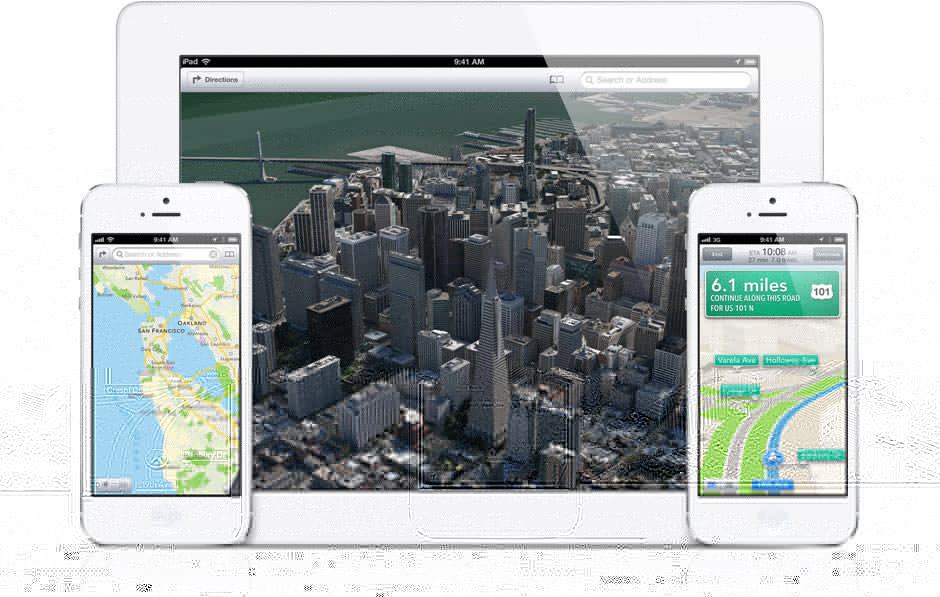
In travel, mapping functionality is a core component. Apple have dispensed with Google Maps as their in-built mapping app and replaced it with their own. Maps have been redesigned with Apple's own intuitive style and will offer offer turn-by-turn voice-guided GPS directions and a 3D mode with flyover design effect.


So not so much of a revolution, but a jump along the pathway of evolution.
I want one!
Wednesday, September 12, 2012
Reviews In Cyberspace
The topic of conversation this week amongst my unofficial motelier focus group acquaintances seems to be all about TripAdvisor. Often the conversation starts out pondering the sustainability of Qualmark (more about that later), but attention soon turns to TripAdvisor and the greater role they are playing in the hearts and minds of the travelling public.
TripAdvisor claims to be the world's largest travel site, with more than 56 million unique monthly visitors eager to read about the travel experience of others and many in turn add to over 75 million reviews and opinions.
Don't let the language of American gush found on many reviews distract you from the fact that TripAdvisor consistently ranks as the number one online source where Kiwis ponder travel and are increasing adding to the noise by uploading their own opinions.
Surprisingly, even Tourism NZ can see the value of TripAdvisor by offering a default option of interactive TripAdvisor widgets to tourism businesses alongside static Qualmark ratings on newzealand.com.
It probably says a lot about the health and acumen of an accommodation sector as to how they engage with and publicly regard TripAdvisor. The motel industry in New Zealand seems to be particularly weary of TripAdvisor and tend to dig a hole for themselves by often raising conspiracy theories and refusing to engage. Unfortunately, industry leaders that enable a negative attitude towards TripAdvisor do little for an industry that needs to embrace a new world of open social media platforms.
Detractors will often knock TripAdvisor by pointing to fake reviews that are allegedly published by self-praising businesses, rivals that trash their competitors or guests that were unable to wrangle a satisfactory discount. While inevitable skulduggery will prevail in any open feedback platform, the instances are very low. Anyone risking posting an out-of-whack review can attract the wrath of considered mass public opinion by often prompting a stream of reviewers that feel the need to unleash natural justice by telling it like it really is.
Dodgy reviews can be quickly buried by reviews of actual real experiences and an equilibrium over time will still deliver the consumer a realistic overview of what to expect. And let's not forget about the consumer - the reason TripAdvisor remains popular is that consumers can easily interpret and value the travel information presented.
When travellers use TripAdvisor, more often than not they are able to match their expectations with reality. While accommodation providers may grumble about perceived inequities with TripAdvisor's open feedback platform, surveys measuring consumer satisfaction levels typically run in the nineties.
This may be all very well, however when an accommodation provider receives an unfair negative review, the experience can be crushing. In New Zealand, accommodation options that attract only modest levels of reviews can suffer disproportionately by a one-off negative review and this can have a major impact upon their reputation.
A knee-jerk response from an accommodation provider receiving an unflattering review can be to trash TripAdvisor and frantically claim a conspiracy theory to anyone that can be bothered to listen. As hard as it may seem, accommodation providers need to front-up by putting it right (even if the customer got it wrong) and ensure similar "misunderstandings" never happen again.
Accommodation providers need to set up an alert to any activity on their TripAdvsor listing and quickly respond to negative comments positively.
Although it may not be a natural response, accommodation providers need to accept that they are unable to opt-out of social networks and embrace TripAdvisor by encouraging satisfied customers to post positive reviews. For many this may require a radical personality shift.
In the eyes of the consumer, the relevance of static stars issued from an unknown "official" tourism body is "nice to have" but is becoming less relevant.
The following embellished graphic currently doing the social media rounds, probably does nothing to enhance TripAdvisor's claim of "offering trusted advice from real travellers"....but I still reckon it's funny:

TripAdvisor claims to be the world's largest travel site, with more than 56 million unique monthly visitors eager to read about the travel experience of others and many in turn add to over 75 million reviews and opinions.
Don't let the language of American gush found on many reviews distract you from the fact that TripAdvisor consistently ranks as the number one online source where Kiwis ponder travel and are increasing adding to the noise by uploading their own opinions.
Surprisingly, even Tourism NZ can see the value of TripAdvisor by offering a default option of interactive TripAdvisor widgets to tourism businesses alongside static Qualmark ratings on newzealand.com.
It probably says a lot about the health and acumen of an accommodation sector as to how they engage with and publicly regard TripAdvisor. The motel industry in New Zealand seems to be particularly weary of TripAdvisor and tend to dig a hole for themselves by often raising conspiracy theories and refusing to engage. Unfortunately, industry leaders that enable a negative attitude towards TripAdvisor do little for an industry that needs to embrace a new world of open social media platforms.
Detractors will often knock TripAdvisor by pointing to fake reviews that are allegedly published by self-praising businesses, rivals that trash their competitors or guests that were unable to wrangle a satisfactory discount. While inevitable skulduggery will prevail in any open feedback platform, the instances are very low. Anyone risking posting an out-of-whack review can attract the wrath of considered mass public opinion by often prompting a stream of reviewers that feel the need to unleash natural justice by telling it like it really is.
Dodgy reviews can be quickly buried by reviews of actual real experiences and an equilibrium over time will still deliver the consumer a realistic overview of what to expect. And let's not forget about the consumer - the reason TripAdvisor remains popular is that consumers can easily interpret and value the travel information presented.
When travellers use TripAdvisor, more often than not they are able to match their expectations with reality. While accommodation providers may grumble about perceived inequities with TripAdvisor's open feedback platform, surveys measuring consumer satisfaction levels typically run in the nineties.
This may be all very well, however when an accommodation provider receives an unfair negative review, the experience can be crushing. In New Zealand, accommodation options that attract only modest levels of reviews can suffer disproportionately by a one-off negative review and this can have a major impact upon their reputation.
A knee-jerk response from an accommodation provider receiving an unflattering review can be to trash TripAdvisor and frantically claim a conspiracy theory to anyone that can be bothered to listen. As hard as it may seem, accommodation providers need to front-up by putting it right (even if the customer got it wrong) and ensure similar "misunderstandings" never happen again.
Accommodation providers need to set up an alert to any activity on their TripAdvsor listing and quickly respond to negative comments positively.
Although it may not be a natural response, accommodation providers need to accept that they are unable to opt-out of social networks and embrace TripAdvisor by encouraging satisfied customers to post positive reviews. For many this may require a radical personality shift.
In the eyes of the consumer, the relevance of static stars issued from an unknown "official" tourism body is "nice to have" but is becoming less relevant.
The following embellished graphic currently doing the social media rounds, probably does nothing to enhance TripAdvisor's claim of "offering trusted advice from real travellers"....but I still reckon it's funny:
Sunday, September 9, 2012
American Election Countdown

The political sideshow leading up to the November 5 election in America shouldn't just be followed for entertainment value. Most Kiwi business owners should be wearyingly keeping an eye on what is unfolding, as they all have a vested interest in the end result.
The story of the first black man knocking down race barriers and being elected President of the United States is an inspirational story, however this would appear to be the only positive legacy that Obama will leave behind when he eventually exits the White House - hopefully soon after the November election.
Unfortunately, Obama still seems to have the edge in most polls over the slightly less scarey option - Romney. Getting rid of an incumbent President after his first term is going to be difficult.
Ignoring the mass job losses and an economy that's tanking, the overwhelming achievement of Obama's presidency is that he has successfully made socialism mainstream. In fact it's hip and cool. For many Americans, Obama has managed to rewrite history and has convinced the masses that "you didn't build that". Free market and capitalism are out - state control and intervention are in.
Are Americans really this stupid? Have their brains, like their expanding waistlines become so fat and lazy that they blindly blame private businesses for their woes and willingly accept any regulation that redistributes the success of the productive?
The video below shows Peter Schiff (a television financial commentator) posing as an anti-business crusader. He found a number of "mainstream" National Convention delegates and attendees who support explicitly outlawing profitability.
Sure, a similar ruse would've uncovered a whole lot of ridiculous comments from nut-jobs attending the Republican National Convention last week ...but those sound-bites wouldn't have been anywhere near as disgusting as what Peter Schiff uncovered this week at the Democratic National Convention:
Hopefully the second part of the Atlas Shrugged trilogy, due in theaters on October 10, may arrive just in time before the election to exercise the lazy and flabby minds of those Americans that have allowed the creep of socialism into their once proud nation:
Sunday, August 26, 2012
Master Of The Universe - RIP Neil Armstrong

What we had seen, in naked essentials—but in reality, not in a work of art—was the concretized abstraction of man's greatness.
The fundamental significance of Apollo 11’s triumph is not political; it is philosophical; specifically, moral-epistemological.
The meaning of the sight lay in the fact that when those dark red wings of fire flared open, one knew that one was not looking at a normal occurrence, but at a cataclysm which, if unleashed by nature, would have wiped man out of existence—and one knew also that this cataclysm was planned, unleashed, and controlled by man, that this unimaginable power was ruled by his power and, obediently serving his purpose, was making way for a slender, rising craft. One knew that this spectacle was not the product of inanimate nature, like some aurora borealis, or of chance, or of luck, that it was unmistakably human—with “human,” for once, meaning grandeur—that a purpose and a long, sustained, disciplined effort had gone to achieve this series of moments, and that man was succeeding, succeeding, succeeding! For once, if only for seven minutes, the worst among those who saw it had to feel—not "How small is man by the side of the Grand Canyon!"—but “How great is man and how safe is nature when he conquers it!”
That we had seen a demonstration of man at his best, no one could doubt—this was the cause of the event’s attraction and of the stunned numbed state in which it left us. And no one could doubt that we had seen an achievement of man in his capacity as a rational being—an achievement of reason, of logic, of mathematics, of total dedication to the absolutism of reality.
Frustration is the leitmotif in the lives of most men, particularly today—the frustration of inarticulate desires, with no knowledge of the means to achieve them. In the sight and hearing of a crumbling world, Apollo 11 enacted the story of an audacious purpose, its execution, its triumph, and the means that achieved it—the story and the demonstration of man’s highest potential."
Ayn Rand - 1969
Friday, August 24, 2012
Tourism NZ Banks On Hobbit
I see that Tourism NZ have uploaded the new "100% Middle-earth" promo videos to its YouTube page this week (the extended version is below).
Tourism NZ has invested around $10 million on producing the new campaign to ride on the potential success of movie audiences admiring attractive landscapes that provide majestic backdrops to on-screen Hobbit-action. Some may be unnerved by Tourism NZ banking on an influx of visitors based upon the appeal of fictional middle-earth dwelling dwarfs.
I must admit that I've lacked the patience to sit through an entire Lord of the Rings movie, however I will be attempting to endure Peter Jackson's latest mystical fantasy movie when it is released in order to fully appreciate the gush of media commentary that will ensue.
A good chunk of the Tourism NZ campaign would appear to be social media based and it will be interesting to see if environmental zealots will use the interactive platforms to hijack New Zealand's 100% Pure branding. I suspect that any attempt to knock the 100% Middle-earth campaign in order to elevate an alarmist environmental agenda will be quickly shouted down by Tolkien fan-boys and patriotic Kiwis.
The imagery of New Zealand looks fantastic and there is a continuation of the 100% Pure You campaign that puts the focus on real people (young and good-looking) interacting with landscapes.
It's difficult to completely capture a realistic tourism experience that New Zealand can offer in a 2-minute promo. While potential guests may enjoy imagining themselves in a New Zealand natural setting for a portion of their holiday, they may be left wondering what first-world hotel, shopping, restaurant and night-life experiences may also be on offer?
While accommodation providers may not be impressed with a leeching, graffiti emblazoned camper-van as the only accommodation option on display, the campaign is aspirational and may trigger potential quality visitors to investigate further what the real deal is about this quirky little remote country at the bottom of the Pacific.
Tourism NZ has invested around $10 million on producing the new campaign to ride on the potential success of movie audiences admiring attractive landscapes that provide majestic backdrops to on-screen Hobbit-action. Some may be unnerved by Tourism NZ banking on an influx of visitors based upon the appeal of fictional middle-earth dwelling dwarfs.
I must admit that I've lacked the patience to sit through an entire Lord of the Rings movie, however I will be attempting to endure Peter Jackson's latest mystical fantasy movie when it is released in order to fully appreciate the gush of media commentary that will ensue.
A good chunk of the Tourism NZ campaign would appear to be social media based and it will be interesting to see if environmental zealots will use the interactive platforms to hijack New Zealand's 100% Pure branding. I suspect that any attempt to knock the 100% Middle-earth campaign in order to elevate an alarmist environmental agenda will be quickly shouted down by Tolkien fan-boys and patriotic Kiwis.
The imagery of New Zealand looks fantastic and there is a continuation of the 100% Pure You campaign that puts the focus on real people (young and good-looking) interacting with landscapes.
It's difficult to completely capture a realistic tourism experience that New Zealand can offer in a 2-minute promo. While potential guests may enjoy imagining themselves in a New Zealand natural setting for a portion of their holiday, they may be left wondering what first-world hotel, shopping, restaurant and night-life experiences may also be on offer?
While accommodation providers may not be impressed with a leeching, graffiti emblazoned camper-van as the only accommodation option on display, the campaign is aspirational and may trigger potential quality visitors to investigate further what the real deal is about this quirky little remote country at the bottom of the Pacific.
Saturday, August 18, 2012
Will Booking.com Enable Increased Credit Card Fraud?

I note with interest that Booking.com are planing to offer a default option to stop sending customer credit card CVC codes to their accommodation suppliers.
What is a CVC code?
The CVC (Card Validation Code) is also known as the CVV (Card Verification Value) and is the non-embossed 3-digit code usually found on the back of credit cards, on the signature panel.
The 3-digit security code lets merchants know that customers are physically holding the card when they make a purchase online or over the phone. The code can be validated automatically during authorisation by the merchant and is another layer of protection that confirms that the card is in the right hands.
Merchants that insist on obtaining a CVC at the time of transaction can reduce fraud before it happens. If a person attempts to use a card number but cannot provide a 3-digit security code, or if the number is returned as invalid, the merchant will cancel the transaction.
There is an emerging trend for merchants to request a CVC during a mail order or online sales process and this additional security measure has to be seen as positive. Any easy process that reduces the rapid rise of credit card fraud adds to the creditability and sustainability of mail order/online sales. The travel industry have a vested interest in keeping consumer's faith in feeling secure handing over credit card details and reducing instances of fraud.
An email sent by Booking.com to accommodation suppliers on Friday announced plans to stop sending CVC codes with reservations as a default option. Suppliers can elect to continue receiving customers' CVC codes by updating the "payment preferences" in their online profile with Booking.com.
In their email to advertisers, Booking.com explains:
This statement is ambiguous and we assume that Booking.com will be removing the requirement for customers to enter CVC numbers during the reservation process if the supplier applies this as a default option (ie does nothing)."Why has booking.com implemented this change? Testing in the marketplace has proven that an increase in conversion (the number of bookings you get) was a direct result of streamlining the reservation process for potential guests".
Will removing the CVC field (below) really increase booking conversions?

We intuitively know that the more easy and the less data a customer has to enter while making an online reservation - the more likely they will complete.
A quick Google search of a few online bulletin boards would suggest that there is an element of customer confusion/resistance in providing CVC numbers and this may translate to some customers feeling uneasy providing this detail during an online reservation process.
After some time, the CVC numbers that are usually printed (not embossed) on cards can become unreadable with wear, making it impossible for some cardholders to make an online reservation if the CVC is a compulsory field- is this another barrier against customers completing an online reservation?
While most merchants are tightening up on credit card security requirements (in particular with card not present transactions), will Booking.com expose their suppliers to a possible increase in credit card fraudulent transactions (charge backs) by reducing the requirement of customer's providing CVC codes in the interest of increased conversions?
It is noted that Booking.com leave it up to their suppliers to collect the accommodation cost from the customer, so the impost of possible credit card charge backs is not their immediate concern.
While I'm always open to making it easy for customers to book accommodation online - is Booking.com's default supplier option of removing the compulsion of the CVC field going too far?
Wednesday, August 15, 2012
Small Town Motels

It would appear that a fair chunk of the motel's unique client base willingly stayed at the property because of the meal service on offer. With a stroke of a pen, the council banned the provision of meals and the motel started bleeding business.
The council admitted that it got it wrong and the motel could have supplied meals after all. Unfortunately the damage has been done with many of the motel's guests long-gone. To rub salt in the wound, the Wairoa District Council's Chief Executive had a pithy response:
"I Can't fix that....I can only say I'm sorry."This is disgusting treatment. A tame lawyer with a bit of time on his hands could have a bit of fun here ripping the council a new one, however with the motel's business heading through the floor, the services probably would have to be offered pro-bono...
To further rub salt in the wound, it would appear that the Wairoa Council's latest rate increases are particularly harsh upon the town's motels, with one motelier claiming his rates would equate to over $1,100.00 per unit compared to the nation's average of $730.
I guess the last thing Wairoa needs at the moment are successful businesses...
"Rates hit for Wairoa moteliers"

Source: Gisborne Herald
Subscribe to:
Posts (Atom)